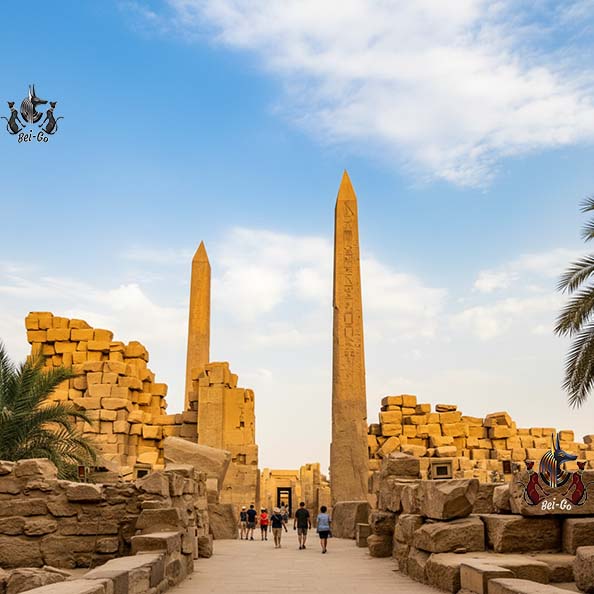


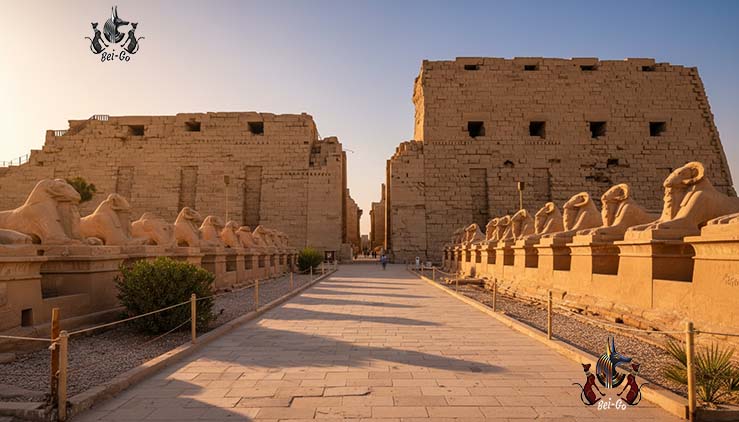
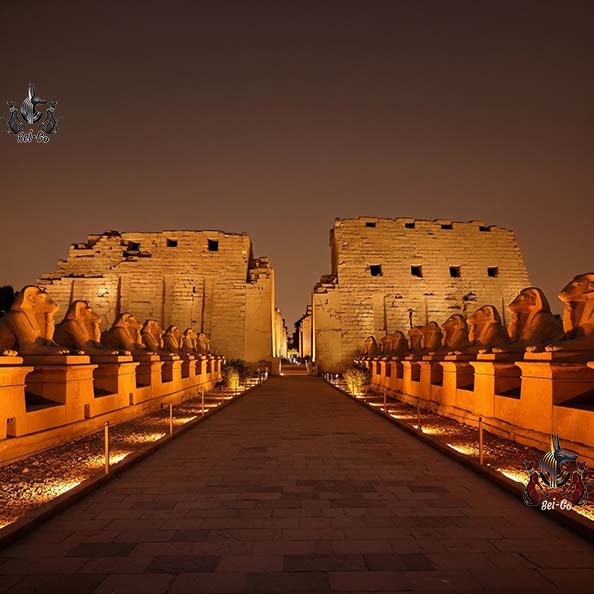
Standing before the Avenue of Ram-headed Sphinxes at Karnak Temple, you're not just visiting another archaeological site—you're stepping into the beating heart of ancient Egyptian civilization. This extraordinary complex in Luxor represents over 1,500 years of continuous construction, religious devotion, and pharaonic ambition. Unlike smaller temples built in a single era, Karnak evolved across generations, with each ruler adding monuments to honor the gods and immortalize their reign. For modern travelers, this means walking through a living timeline where every courtyard, column, and carving tells a different chapter of Egypt's golden age. The sheer scale can feel overwhelming at first, but that sense of wonder is precisely what makes Karnak unforgettable. Whether you're drawn by history, spirituality, or architectural magnificence, this is where Egypt's grandest story unfolds in stone. With expert guidance, you'll unlock layers of meaning that transform your visit from sightseeing into genuine discovery of a civilization that shaped human history.
Welcome to Egypt's Greatest Temple Complex
Fifteen Centuries of Pharaonic Ambition
The story of Karnak begins around 2055 BC during Egypt's Middle Kingdom and continues through the Ptolemaic period, making it one of history's longest-running construction projects. What you see today represents contributions from over thirty dynasties, each pharaoh determined to leave their mark on this sacred precinct dedicated to Amun-Ra, king of the gods. The temple's golden age arrived during the New Kingdom when Thebes served as Egypt's capital and religious center. Legendary rulers like Hatshepsut, Thutmose III, Seti I, and Ramesses II competed in architectural grandeur, transforming Karnak into the empire's spiritual, administrative, and economic powerhouse. Walking through the complex means experiencing architectural styles that evolved over millennia—from modest Middle Kingdom chapels to the colossal New Kingdom monuments that define the site today. The same pharaohs who expanded Karnak were entombed across the river in the Valley of the Kings, creating a sacred landscape that unified life and death. This continuity of vision across centuries created something unprecedented: a sacred city where past and present merged, and where each generation built upon their ancestors' devotion to create monuments that would outlast empires.
Architectural Masterpieces That Define Ancient Egypt
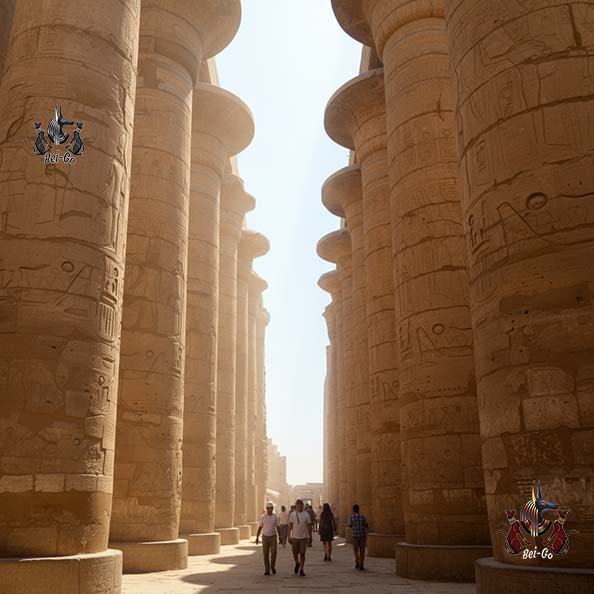
Within Karnak's vast precinct, certain monuments stand as pinnacles of ancient engineering and artistry. The Great Hypostyle Hall remains the crown jewel—entering this space is like stepping into a petrified forest of massive columns. One hundred thirty-four sandstone pillars rise toward the sky, with the twelve central columns soaring over twenty-one meters high, their capitals carved to resemble open papyrus flowers. The side columns feature closed papyrus buds, creating a symbolic garden that once supported a painted ceiling of golden stars. Every surface bears intricate reliefs depicting military campaigns, religious processions, and offerings to the gods. Beyond this architectural marvel lies the towering Obelisk of Hatshepsut, one of Egypt's few female pharaohs, rising as testament to her remarkable reign and determination to prove her divine right to rule. The monumental pylons, massive gateway structures that mark transitions between sacred spaces, demonstrate engineering prowess that still impresses modern architects. As part of Ancient Thebes with its Necropolis, Karnak earned UNESCO World Heritage status, recognized as an irreplaceable testament to human cultural achievement and architectural genius.
Ready to Experience This?
Our curated tours bring these destinations to life with expert guides
Explore Our ToursDecoding the Sacred Symbols
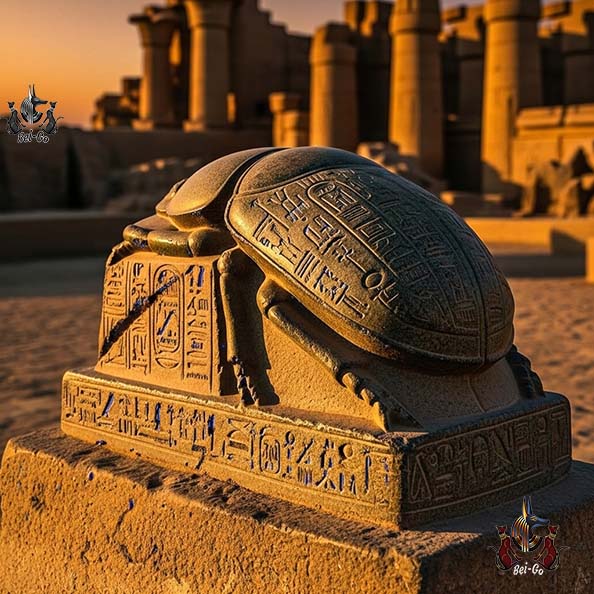
Karnak transcends mere architecture—it's a three-dimensional textbook of ancient Egyptian spirituality and cosmic understanding. Every element served symbolic purpose, designed to replicate the universe and facilitate divine-human connection. The Great Hypostyle Hall wasn't simply impressive space but represented the primordial swamp of Nun from which creation emerged. Its papyrus-shaped columns symbolized the reeds of that mythical marsh, while the star-painted ceiling (now largely vanished) depicted the heavens. Even the Giant Scarab statue beside the Sacred Lake carries profound meaning as an incarnation of Khepri, the god of the rising sun and eternal renewal. Local tradition holds that circling this statue seven times brings good fortune, a custom that connects modern visitors to ancient beliefs. Understanding these symbolic layers transforms stones into stories, revealing how the temple's design mirrors Egyptian cosmology where earth, sky, and underworld intersected. Bei-Go expert guides specialize in decoding these ancient messages, helping travelers see beyond the monuments to understand the spiritual vision that inspired them and appreciate the sophisticated worldview that shaped this remarkable civilization.
The Sacred Lake's Spiritual Significance
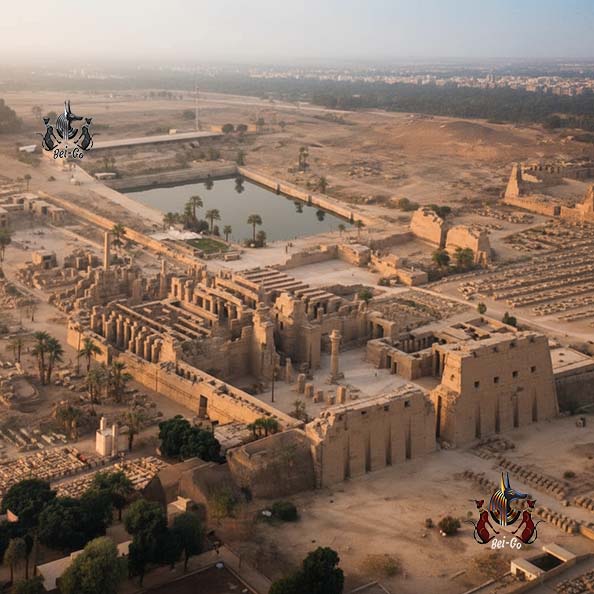
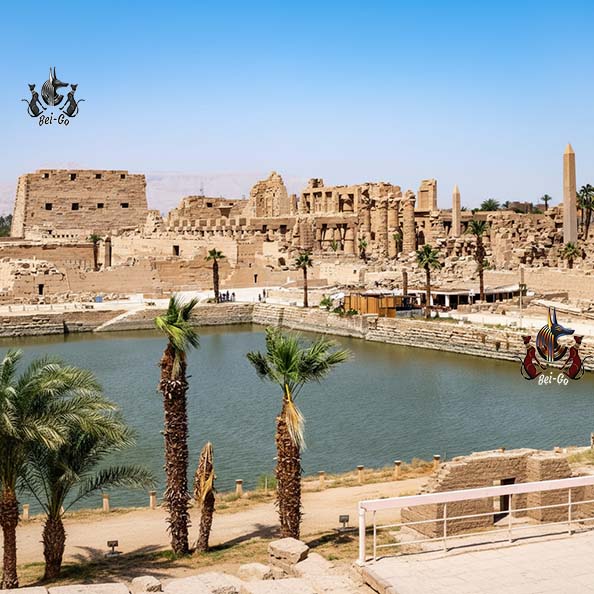
Beyond Karnak's monumental halls lies the Sacred Lake, a serene rectangular pool that served essential ritual functions in ancient temple life. This man-made body of water, surrounded by stone embankments and palm trees, provided priests with purification waters before conducting daily ceremonies and festivals. The lake's spiritual significance extended beyond practical use—it represented the primordial waters of creation and connected the earthly temple to cosmic forces. From elevated viewpoints, visitors today can appreciate how the lake integrates with the broader complex, with massive pylons, columns, and obelisks rising dramatically beyond its peaceful shores. The contrast between the tranquil water and the monumental architecture creates a contemplative moment in your Karnak visit, offering perspective on how ancient Egyptians balanced grandeur with spiritual introspection. Walking along the lake's perimeter, you'll find the famous Scarab statue and gain views of temple sections invisible from ground level. Just as the Temple of Kom Ombo further south along the Nile showcases different aspects of Egyptian religious architecture, the Sacred Lake reveals Karnak's quieter spiritual dimensions that reward travelers who venture beyond the main tourist routes.
Planning Your Perfect Visit
Visiting Karnak requires strategic planning to maximize both comfort and discovery. The complex opens daily from 6:00 AM to 5:30 PM, with optimal visiting times being early morning (right at opening) or late afternoon to avoid peak heat and crowds. Entrance costs 300 EGP for adult international visitors and 150 EGP for students with valid identification. Comfortable walking shoes are absolutely essential—you'll cover significant distance across uneven ancient paving stones. Bring a wide-brimmed hat, sunglasses, and refillable water bottle, as the Egyptian sun shows no mercy and shade is limited. Plan to spend at least three to four hours exploring the main precinct without rushing through this extraordinary site. Don't miss the evening Sound & Light Show, where dramatic illumination and narration bring the temple's history alive after dark—an entirely different perspective that many travelers rank as their trip's highlight. Bei-Go creates comprehensive Luxor itineraries that seamlessly integrate Karnak with other essential sites, handling all logistics so you can focus on experiencing rather than organizing, ensuring your Egyptian journey matches the grandeur of the monuments themselves.
Your Journey Into Eternity
Karnak Temple represents far more than ancient ruins or tourist attraction—it's a bridge spanning three millennia, connecting modern travelers with human civilization's most enduring achievements. The ambition, artistry, and spiritual devotion carved into these stones continue inspiring wonder in everyone who walks through its gates. For travelers exploring Egypt, Karnak stands as the undisputed centerpiece of any Luxor visit and indeed any Egyptian journey. The memories you create here—standing among those towering columns, touching stones placed by ancient hands, witnessing sunset illuminate millennia-old carvings—will remain etched in your consciousness as permanently as hieroglyphs mark these walls. This is where you'll understand why ancient Egypt captivated the world's imagination and continues to do so today. The greatest pharaohs of history walked these same paths, performed rituals in these same halls, and left their mark on every surface. Your visit to Karnak completes the circle, allowing you to witness their legacy firsthand and carry forward the wonder they intended to inspire for all eternity.