

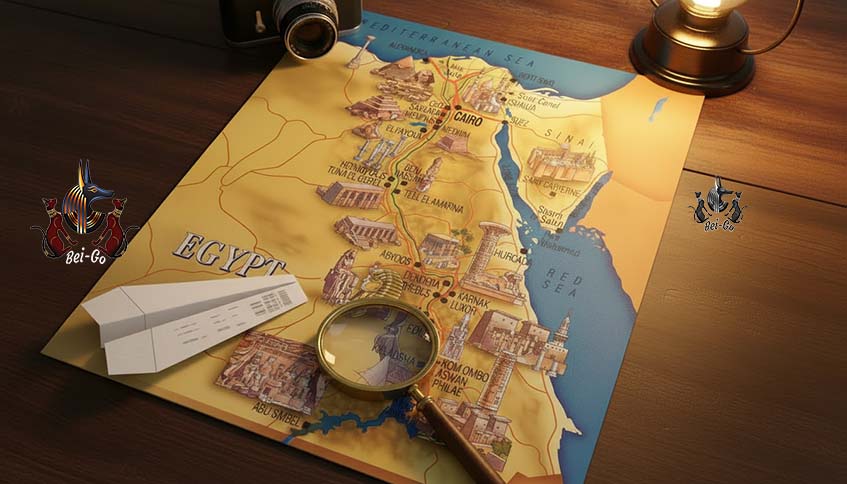
Opening a tourist map of Egypt means confronting an immediate, wonderful problem: every single point on it tells millennia of history. Cairo is the natural answer to where to begin. The city places you at the intersection of ancient and modern, preparing your senses for everything that follows. The Pyramids of Giza dominate the western horizon just a few kilometers from the urban sprawl — the Great Pyramid of Cheops stands 138 meters tall, built from approximately 2.3 million stone blocks, while the Great Sphinx has gazed eastward for over 4,500 years. Nearby, the new Grand Egyptian Museum on the Giza Plateau houses more than 100,000 artifacts, including the complete treasures of Tutankhamun. Beyond the pharaonic sites, Islamic Cairo and the Khan el-Khalili bazaar offer winding alleys where spice merchants, artisans, and centuries-old mosques create an atmosphere unlike anywhere else on Earth. Plan at least 2–3 days for Cairo. Visit the Pyramids at dawn — gates open at 7:00 AM — to beat both the crowds and the heat. The ideal travel window for Egypt runs from October through April, when temperatures stay between 20–28°C. Avoid Friday mornings when several sites observe reduced visiting hours.
Cairo and the Pyramids: The Essential Starting Point on Every Egypt Map
The Giza Plateau in Depth: What Egypt's Most Famous Map Point Hides Beyond Three Pyramids
Most visitors to the Giza Plateau photograph the three iconic pyramids and move on — yet the necropolis stretching across 2,000 hectares rewards anyone willing to look closer. The six Queens' Pyramids, smaller but elegantly proportioned, stand beside the main structures as dedications to royal consorts. Chephren's Valley Temple demonstrates ancient engineering at its most refined: red granite and alabaster blocks fitted without mortar, their surfaces polished so precisely that a knife blade cannot pass between joins. Hundreds of mastabas - flat-roofed rectangular tombs belonging to nobles, viziers, and the architects who built the pyramids — spread across the plateau, and archaeologists continue to uncover new chambers within them. The UNESCO World Heritage listing for Memphis and its Necropolis recognizes this entire landscape as one of humanity's most outstanding cultural achievements. Since November 2025, the Grand Egyptian Museum completes the Giza experience with Cheops' solar boats — 43-meter cedar vessels disassembled and buried 4,500 years ago — now displayed in climate-controlled galleries alongside thousands of treasures. Booking a certified Egyptologist guide for your Giza visit is strongly recommended: they decode hieroglyphs on the spot and explain how ancient builders aligned the pyramids to stars using only geometry and celestial observation, with millimetric accuracy that still puzzles modern engineers.
Luxor and Karnak: The Open-Air Museum at the Heart of Upper Egypt's Tourist Map
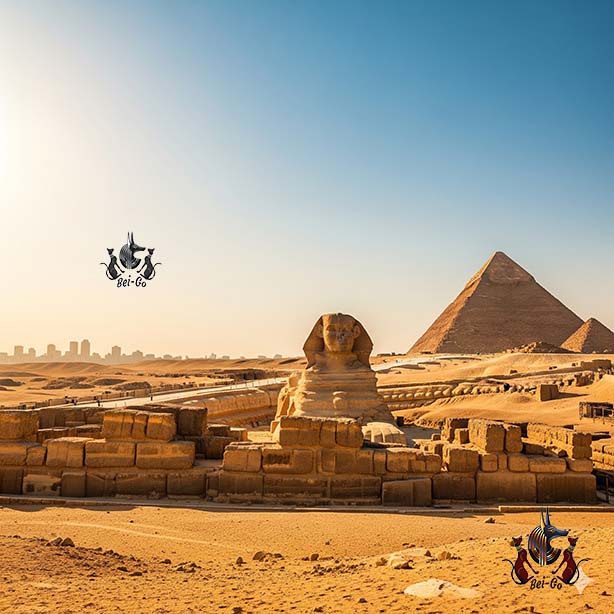
Luxor sits at the point where Egypt's tourist map transitions from the bustle of Cairo to the timeless grandeur of Upper Egypt. This was ancient Thebes, capital of the most powerful pharaohs in history, and it remains one of the world's greatest concentrations of monuments. The Karnak Temple Complex took 1,500 years to build: its Great Hypostyle Hall alone contains 134 columns each standing 23 meters tall, arranged in a forest of carved stone so dense that the sky almost disappears. Towering obelisks, a Sacred Lake where priests once performed ritual purifications, and avenues of ram-headed sphinxes all form part of a site that requires a full day to explore properly. To the south, Luxor Temple glows magnificently after dark along the recently restored avenue of human-headed sphinxes connecting the two complexes. On the west bank of the Nile, the Valley of the Kings guards 63 royal tombs carved deep into the limestone cliffs, their interior walls covered in vivid paintings depicting the journey to the afterlife — explore the full history and visitor details in our guide to the Valley of the Kings in Luxor. Hatshepsut's mortuary temple at Deir el-Bahari merges into the cliff face with dramatic terraced architecture. Allow a minimum of three days for Luxor: one for Karnak and Luxor Temple, one for the Valley of the Kings and Hatshepsut, one for secondary sites like the Ramesseum or Medinet Habu. Avoid summer — temperatures regularly exceed 45°C.
Ready to Experience This?
Our curated tours bring these destinations to life with expert guides
Explore Our ToursThe Nile: The Blue Artery That Connects Every Destination on Egypt's Tourist Map
Trace the Nile's blue line across any Egypt tourist map and you are following the country's true organizing principle — the river that made civilization here possible and still connects its greatest monuments today. A Nile cruise between Luxor and Aswan is not merely transportation; it is the essential Egyptian experience. Sailing at dawn past palm-fringed banks, farming villages that have changed little in centuries, and ancient temples rising directly from the water's edge transforms the journey between sites into something memorable in itself. The classic Luxor–Aswan route covers approximately 200 kilometers over 3–4 nights, stopping at Edfu and Kom Ombo. Modern cruise ships offer five-star comfort — deck pools, panoramic restaurants, private balconies — while traditional dahabiyas with 8–12 cabins provide a more intimate, unhurried atmosphere. Feluccas, the ancient lateen-sailed wooden boats, suit adventurous travelers seeking something closer to the way Egyptians have sailed this river for thousands of years. Prices range from approximately €400 to €2,000 or more per person depending on vessel category and season. For the best combination of weather and availability, book your cruise in October–November or February–March. For everything you need to know about routes, vessels, and what to expect on board, the complete Nile Cruises in Egypt guide covers every detail. Working with a specialist travel consultant when booking a Nile cruise ensures you select the right vessel category and avoid common scheduling conflicts — Bei-Go offers exactly this kind of tailored expertise.

Edfu and Kom Ombo: Two Architectural Jewels Every Egypt Itinerary Should Include
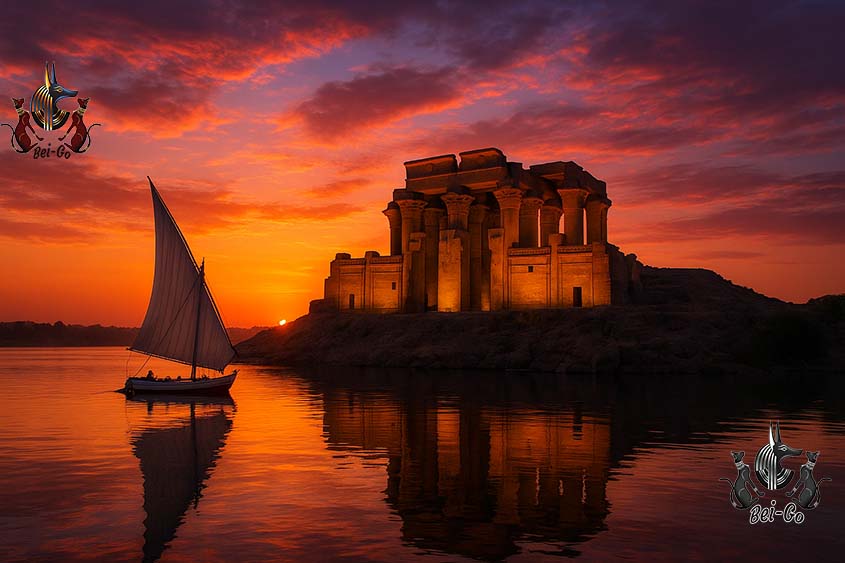
Sailing south from Luxor, every Nile cruise pauses at two temples that represent ancient Egyptian religious architecture at its most complete and spectacular. The Temple of Edfu, dedicated to the falcon god Horus, is Egypt's second-largest temple and its best-preserved — its 36-meter pylons and inner sanctuary chambers still display crisp, deeply carved reliefs depicting the mythological battle between Horus and Seth in extraordinary detail. Built between 237 and 57 BC during the Ptolemaic period, Edfu offers visitors the clearest possible picture of how a fully functioning ancient Egyptian temple was organized, decorated, and used ritually. Further south along the river, Kom Ombo Temple occupies a dramatic promontory position directly above a Nile bend, making it one of the most visually striking sites on the entire cruise route. This remarkable sanctuary is divided perfectly down the center: the left half dedicated entirely to Sobek the crocodile god, the right to Horus the Elder — a unique dual-deity design found nowhere else in Egypt. The adjacent museum displays mummified crocodiles recovered from nearby, offering fascinating insight into how these animals were venerated as living representatives of the divine. The best time to visit Kom Ombo is at sunset, when golden light catches the temple's reliefs — including ancient depictions of surgical instruments and astronomical calendars — with particular clarity. For an in-depth visit guide to this extraordinary site, read our dedicated article on the Temple of Kom Ombo.
Aswan and Abu Simbel: The Magnificent Southern Crown of Egypt's Tourist Map
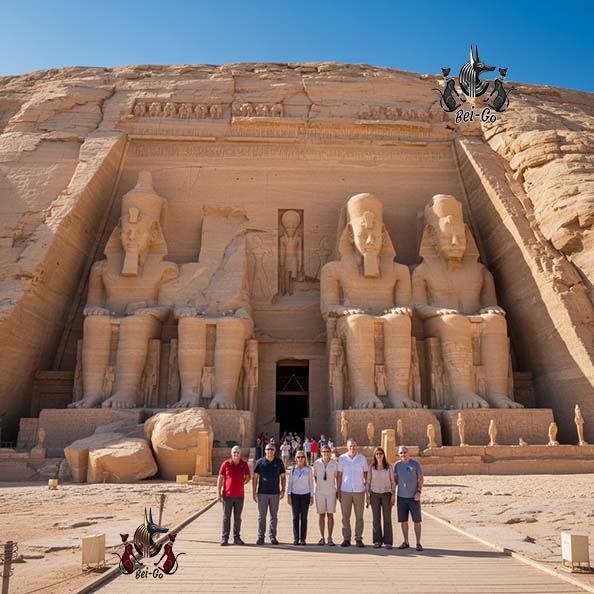
Aswan marks the southern frontier of Egypt's classical tourist map, where the Nile flows between smooth granite boulders and Nubian desert dunes in a landscape of exceptional beauty. The city itself rewards exploration: colorful Nubian markets, Philae Temple rising from its island and accessible only by motorboat, the monumental Aswan High Dam completed in the 1960s, and a general atmosphere more relaxed and intimate than either Cairo or Luxor. But the true southern highlight lies 280 kilometers further: Abu Simbel. The four colossal seated statues of Ramses II, each standing 20 meters tall and carved directly into the sandstone mountain face, were designed as a deliberate statement of Egyptian imperial power addressed to the Nubian peoples arriving from the south. Twice each year — on February 22 and October 22, the dates of Ramses' coronation and birthday — sunlight penetrates 65 meters into the temple interior to illuminate three of the four sanctuary statues with extraordinary precision. Between 1964 and 1968, in one of the most ambitious engineering operations in modern history, the entire Abu Simbel complex was dismantled into 807 blocks and relocated 65 meters higher to save it from the rising waters of Lake Nasser — an achievement recognized by Egypt's Ministry of Tourism and Antiquities as a landmark in heritage preservation. Reach Abu Simbel by flight from Aswan (approximately 50 minutes) or by organized bus convoy (around 3.5 hours). For personalized itineraries combining Aswan, Abu Simbel, and the complete Nile route, Bei-Go provides expert destination consultations.
From Map to Journey: How to Build Your Perfect Egypt Itinerary
An Egypt tourist map shows you the distances and the destinations — but transforming it into a genuinely memorable journey requires careful, informed planning. A focused 7-day tour covers the essentials well: two days in Cairo for the Pyramids and the Grand Egyptian Museum, three to four days on a Luxor–Aswan Nile cruise with temple stops at Edfu and Kom Ombo, and one full day dedicated to Abu Simbel. If your schedule allows 10 to 14 days, Egypt opens up further — Alexandria and its Mediterranean heritage, the spectacular silence of the Western Desert oases, or a few days of Red Sea relaxation can all be added without rushing the core itinerary. Several practical factors are worth building into your planning from the start: October through April delivers the most comfortable travel conditions, with peak season running December through February; traveling during Ramadan requires flexibility since restaurants close during daylight hours and some site schedules change; certified Egyptologist guides make an enormous difference to how much you absorb and enjoy each location; and a realistic mid-to-high level daily budget of €100–150 per person covers four-to-five-star accommodation, meals, and site entrance fees comfortably. Egyptian logistics can catch independent travelers off guard — long distances between sites, unpredictable urban traffic, and occasional unannounced closures are realities to plan for. Working with a specialist operator removes this uncertainty entirely. Bei-Go designs custom Egypt itineraries managing all transfers, Egyptologist guide assignments, priority site access, and accommodation — transforming your tourist map into a seamless, expertly guided journey through one of the world's greatest civilizations.