The Boats of Khufu: Eternal Royal Vessels Sailing Toward the Sun
Origins of a Legend: The Birth of Khufu’s Royal Boats
Deep within the golden sands of Giza lies one of the greatest archaeological enigmas of ancient travel: the Boats of Khufu. These royal vessels were not ordinary boats—they were meticulously crafted masterpieces intended to accompany Pharaoh Khufu on his eternal journey after death. When travelers explore the story of these boats, they step into a narrative that is more than four thousand years old, revealing how ancient Egyptians saw the afterlife as a grand journey. For them, every soul was a traveler, and every pharaoh needed a vessel capable of crossing the heavens.
Khufu’s royal engineers built the boats with sacred intention, combining faith, precision, astronomy, and deep respect for the Nile. The ships were symbols of spiritual travel, connecting life on Earth to life beyond. The ancient Egyptians believed that a solar journey required a physical craft-a vessel to carry Khufu beside the sun god Ra on his daily trip across the sky. This belief shaped one of the world’s earliest concepts of eternal travel, revealing a culture where navigation, spirituality, and craftsmanship were inseparable.
Today, visitors from around the world travel to Egypt to witness this extraordinary piece of history. Experiencing these boats firsthand feels like a historical journey unlike any other, transforming a simple museum visit into a deeper vacation of discovery. Seeing the restored wooden planks, imagining Khufu himself once floating across eternity, turns an ordinary trip into a timeless travel memory.
The Great Discovery: When the Sun Revealed the Buried Ship
In 1954, an unexpected discovery forever changed the understanding of ancient Egyptian travel engineering. Archaeologist Kamal El-Mallakh uncovered a sealed pit near the Great Pyramid of Giza. Inside, in perfect order, lay more than 1,200 wooden pieces, preserved under limestone slabs. These fragments belonged to a royal ship that had not touched sunlight in forty-six centuries.
This discovery became one of the most significant archaeological findings of the 20th century. It revealed more than just an artifact—it unveiled the story of spiritual travel in ancient Egyptian belief systems. Scholars determined that the boat had been intentionally dismantled, buried, and sealed, not for river use, but for the pharaoh’s cosmic journey after death. The boat represented a sacred vessel of eternal travel.
At the time of its discovery, the dry desert air had perfectly preserved the cedar wood. Experts realized that they were looking at the oldest full-size ship ever found in human history. Travelers who learn about this discovery understand that Egyptian civilization wasn’t only advanced in architecture and astronomy, but also in deep spiritual symbolism.
Visiting Egypt to explore this story allows travelers to experience the thrill of discovery and the emotional power of uncovering history from beneath the sands. A vacation that weaves together mystery, archaeology, and travel becomes unforgettable. Witnessing the boat today makes every visitor feel connected to the moment when sunlight touched its wood for the first time in thousands of years.

Engineering Genius: How the Ancient Egyptians Built the Solar Boats
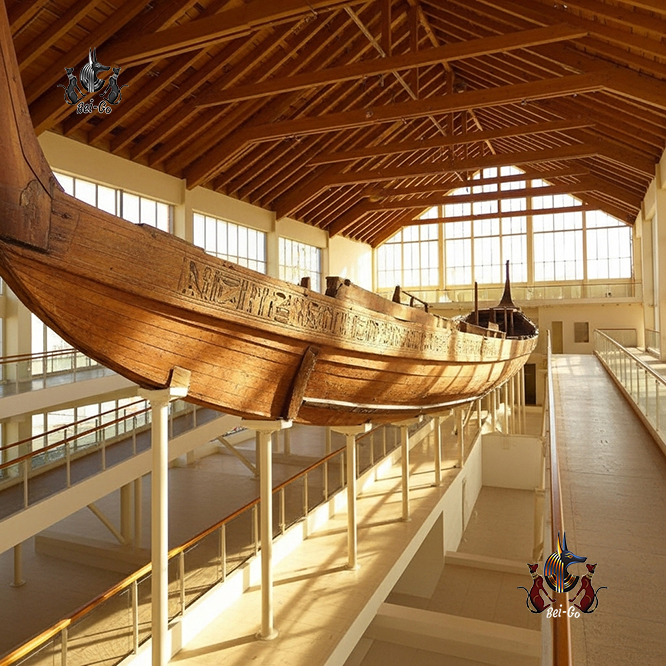
Khufu’s boats are a masterclass in ancient engineering. Made from Lebanese cedar and Egyptian acacia, the ships are 43 meters long, making them comparable in size to modern sailing yachts. However, what astonishes travelers and engineers alike is the construction method: the ship was built without a single metal nail.
The ancient builders used a system of rope stitching to bind the planks together. This unique method allowed the wood to expand and contract with water—an intelligent detail for long travel across the Nile. Every component was shaped with extreme precision, proving advanced craftsmanship thousands of years before industrial tools existed.
When travelers examine the boat up close, they are struck by how the wood reveals the fingerprints of human hands. Each curve, each carved angle, each polished surface represents hours of skilled labor dedicated to creating a vessel worthy of a divine journey. This depth of craftsmanship transforms a simple museum visit into an emotional travel moment.
The boats also demonstrate the sophistication of ancient logistics. They could be assembled and disassembled, allowing movement across long distances. For modern travel enthusiasts and adventure seekers, the story of how these boats were engineered mirrors today’s fascination with exploration and travel challenges.
Seeing the boat today reveals more than its structure—it reveals a society that viewed travel not only as movement, but as meaning. A journey with purpose.

Symbolism of the Journey: Sailing Toward the Sun
Khufu’s Solar Boats were not designed for earthly travel—they were designed for cosmic navigation. According to ancient Egyptian belief, the sun god Ra traveled across the sky by day and crossed the underworld by night. As the son of Ra, Khufu required a ship to accompany him on this eternal voyage.
The boats symbolize the soul’s journey toward rebirth. Every traveler who stands before the vessel today experiences the universal meaning of travel: crossing from one state of existence to another. This connection between physical movement and spiritual transformation is what makes the boats profoundly moving for visitors.
Travelers visiting the Grand Egyptian Museum feel this emotion: the realization that travel in ancient Egypt was not just movement—it was purpose. A metaphor for life and eternity.
The wood, shaped by ancient hands, still whispers the same message across time: “A journey does not end. It transforms.” For modern travelers seeking deeper meaning in their vacation experiences, this story offers a powerful reminder that travel is a gateway to self-discovery.

Planning Your Visit: How to Experience Khufu’s Boat at GEM
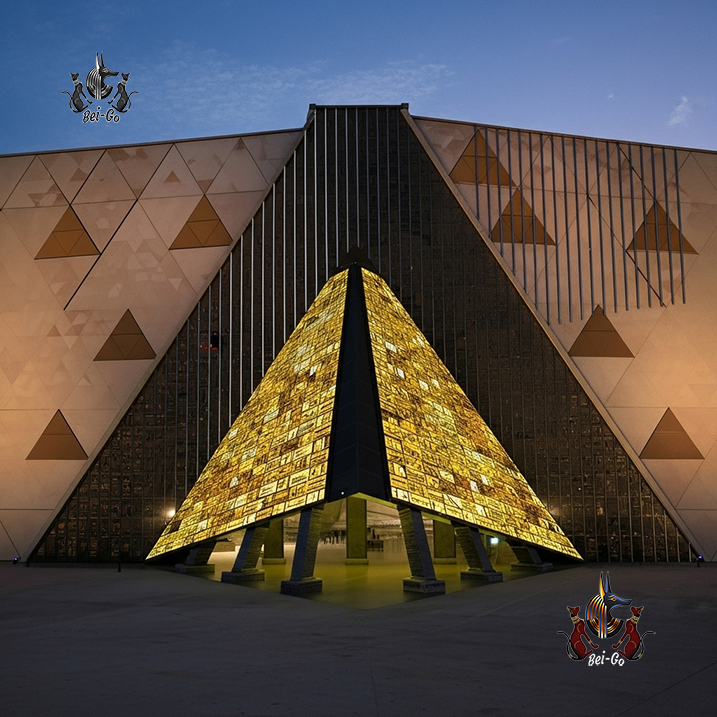
Khufu’s Solar Boats are now displayed inside the Grand Egyptian Museum (GEM), the newest and most advanced archaeological museum in the world. The museum’s architecture—glass, stone, and modern geometric lines—creates a stunning contrast to the vessel’s ancient structure. Travelers exploring the museum can plan a full travel day: the pyramids are visible right outside the museum grounds, allowing the perfect travel combination of archaeology and sightseeing.
To plan your trip, consider arriving early to enjoy the boat exhibit before crowds grow. Photography is allowed in designated zones, and bilingual museum placards explain the boat’s engineering, religion, and spiritual symbolism. GEM offers guided tours that enrich the travel experience with exclusive insight into the boat’s restoration process.
For travelers seeking the simplest planning experience, Bei-Go allows users to browse itineraries, book activities, and customize their museum day trip with easy digital travel planning.

Traveler Impressions: What Visitors Say About the Experience
Visitors consistently describe Khufu’s Solar Boats as one of the most awe-inspiring artifacts they have ever seen. The scale, preservation, and emotional power of the exhibit make it a favorite among cultural travelers looking for meaningful vacation experiences.
Travelers who used Bei-Go especially appreciate how the itinerary guidance simplifies the visit to GEM, giving them more time to explore instead of searching for logistics. Many say the moment they stood beneath the suspended ancient boat was the highlight of their entire travel to Egypt.
Walking around the ship creates a feeling of movement, as if the boat is still traveling toward the sun. Families, solo travelers, and history lovers all share the same reaction—a mix of awe and emotional connection.

Expert Travel Tips: Best Time to Visit the Grand Egyptian Museum
For the best travel experience, visit the Grand Egyptian Museum in the late afternoon. The museum’s glass façade catches the sunset, flooding the hall with warm, glowing light that enhances the boat’s natural wood tone. Travelers can end their museum tour with an outdoor walk, where the pyramids appear silhouetted against the rose-colored sky.
Purchase entry tickets online to avoid queues. Wear comfortable shoes, as the museum is large and requires extensive walking. Bring water, especially during warmer seasons, and allocate two to three hours for a relaxed and cultural vacation experience.
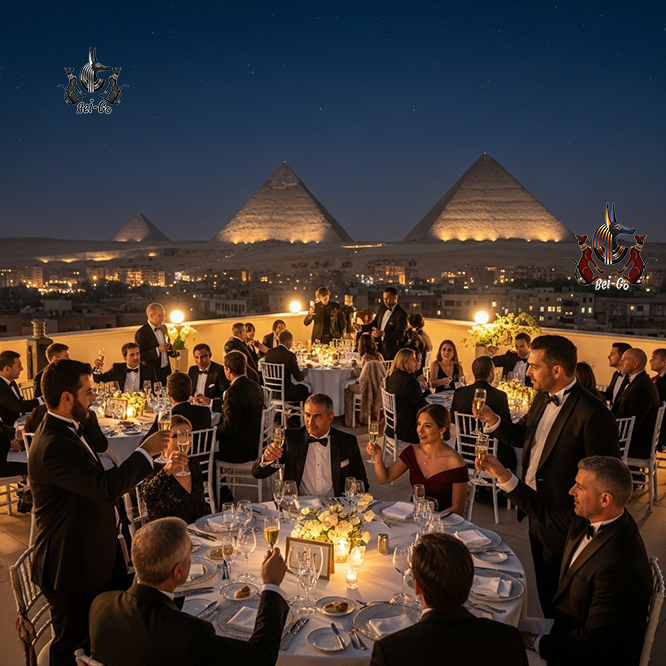
Travel specialists at Bei-Go recommend pairing the museum visit with a light dinner overlooking the pyramids for a perfect end to the day.

Frequently Asked Questions
Where is Khufu's Solar Boat (Khufu Ship) located now?
The Khufu Solar Boat is now displayed at the Grand Egyptian Museum (GEM) in Giza, near the Pyramids. It was moved from its original dedicated museum next to the Great Pyramid in 2021 to ensure its long-term preservation and high-tech exhibition at the GEM.
Is there a separate ticket required to see the Khufu Boat exhibition inside the GEM?
en Yes. While the basic GEM ticket grants access to the main galleries, the exhibition for Khufu's Boats is often housed in a separate, dedicated building within the GEM complex. Access to this specific gallery usually requires a separate, additional ticket on top of the general admission fee. Always check the official GEM website when booking.
Is photography allowed inside the Khufu Boat Museum at the GEM?
Generally, non-flash photography with a phone or small camera is allowed in most areas of the GEM. However, there may be specific restrictions or an extra fee for photography inside the climate-controlled Khufu Boats Museum due to the fragility of the wooden artifact. Always look for signage or ask an attendant before taking photos.
How old is the Khufu Solar Boat and what was its purpose?
The Khufu Solar Boat dates back to around 2500 B.C., making it over 4,500 years old. Its purpose was ritualistic: it is a Solar Barque intended to carry the deceased Pharaoh Khufu on his eternal journey across the heavens with the Sun God Ra, ensuring his rebirth in the afterlife.