
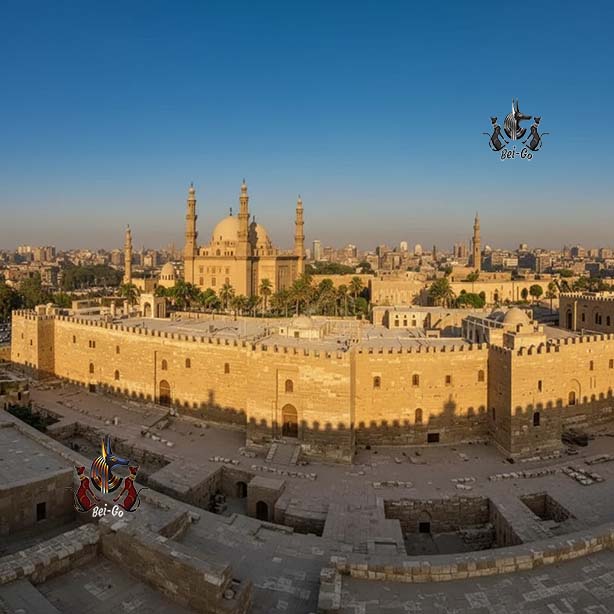
The Citadel and Mosque of Muhammad Ali: Cairo's Architectural Masterpiece
Cairo's Crown Jewel - An Architectural Marvel
The Citadel of Saladin stands as one of Cairo's most commanding landmarks, with the magnificent Mosque of Muhammad Ali crowning its summit in spectacular fashion. When travelers visit Cairo Egypt, this architectural ensemble immediately captures attention from across the sprawling metropolis, dominating the skyline from its elevated position on the Mokattam Hills. The mosque's massive central dome rises 52 meters into the sky while two slender minarets reach an impressive 84 meters on the eastern side, creating a silhouette that has defined Cairo's horizon for nearly two centuries. Often called the Alabaster Mosque due to its stunning marble exterior cladding, this Ottoman-inspired masterpiece sits within the fortified walls of a medieval citadel that has witnessed over 800 years of Egyptian history. Built between 1830 and 1848 under the commission of Muhammad Ali Pasha and designed by architect Youssef Bouchnak, the mosque represents the pinnacle of 19th-century Islamic architecture in Egypt. Together, the Citadel and mosque offer visitors an extraordinary combination of military history, religious significance, and panoramic views that stretch across Cairo's ancient and modern quarters.
The Citadel of Saladin - Fortress of Power
The Saladin Citadel represents one of the most impressive examples of medieval Islamic military architecture in the world, constructed by the legendary Sultan Salah ad-Din (Saladin) beginning in 1176. Built strategically on the Mokattam Hills, the fortress provided unparalleled defensive advantages with commanding views over Cairo and the surrounding desert, making it virtually impregnable to enemy attacks. For nearly 700 years, this massive fortification served as the residence and seat of power for Egypt's rulers, including the Ayyubid, Mamluk, and Ottoman dynasties who shaped the nation's destiny from within these limestone walls. The Citadel's imposing defensive structures feature massive stone blocks, formidable towers, and elaborate gates that tell stories of countless sieges, political intrigue, and the rise and fall of empires. Within the complex, visitors discover multiple palaces, mosques, and museums that chronicle different eras of Egyptian sovereignty. The site's strategic importance extended beyond military function to become the administrative heart of Egypt until the 19th century. After exploring the fortress, many visitors continue their journey through Islamic Cairo to discover Khan El Khalili Market, Cairo's timeless bazaar, where centuries of trade and culture remain vibrantly alive.

Muhammad Ali's Grand Vision - Building a Legacy
Muhammad Ali Pasha, who ruled Egypt from 1805 to 1848 and is often called the founder of modern Egypt, commissioned this grand mosque as both a religious center and an enduring monument to cement his transformative legacy. Construction began in 1830 and required nearly two decades to complete, representing a massive undertaking that employed thousands of skilled craftsmen, laborers, and artisans from across the Ottoman Empire and Egypt. The ruler deliberately chose Ottoman architectural style rather than traditional Mamluk Egyptian design, reflecting his Albanian heritage and strong political connections to Istanbul while asserting his vision of Egypt's place within the broader Islamic world. The site selection within the ancient Citadel held profound historical and symbolic significance, positioning his monument at the heart of Egyptian power where centuries of rulers had governed before him. Muhammad Ali himself is entombed within the mosque in an ornate marble tomb located in the southwest corner, transforming this place of worship into both a spiritual center and a royal mausoleum. The construction utilized innovative engineering techniques and imported materials that pushed the boundaries of what Egyptian builders had previously accomplished. For comprehensive exploration of this architectural masterpiece alongside other essential landmarks, Cairo's timeless treasures through guided Egypt tours provide expert historical insights and cultural context.
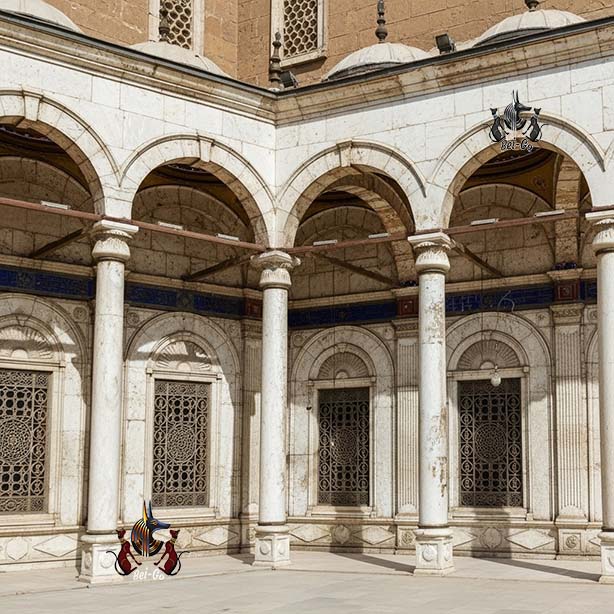
Architectural Splendor - The Alabaster Marvel
The mosque's distinctive nickname, the Alabaster Mosque, derives from the extensive use of alabaster marble that covers both interior and exterior walls, creating a luminous quality that transforms throughout the day as sunlight shifts across its reflective surfaces. The exterior walls are clad with marble panels measuring up to 11 meters in height, an extraordinary feat of engineering and craftsmanship that required importing massive quantities of stone and developing specialized installation techniques. The architectural design closely follows the Ottoman imperial mosque style pioneered in Istanbul, particularly inspired by the Yeni Mosque, featuring a spacious central prayer hall covered by a magnificent dome supported by four semi-domes that distribute structural weight ingeniously. The main dome measures 21 meters in diameter and rises to an interior height that creates an overwhelming sense of sacred space, while four smaller domes at the corners produce a cascading effect emphasizing the building's dramatic verticality. Two pencil-shaped minarets flank the eastern facade, their slender proportions reaching 84 meters skyward with multiple decorative balconies characteristic of Turkish Ottoman design that distinguished them from the stockier Mamluk minarets prevalent throughout Cairo. The mosque sits on a raised platform accessed by monumental staircases, with the entire complex enclosed by decorative iron fencing that defines the sacred precinct from the surrounding Citadel grounds.
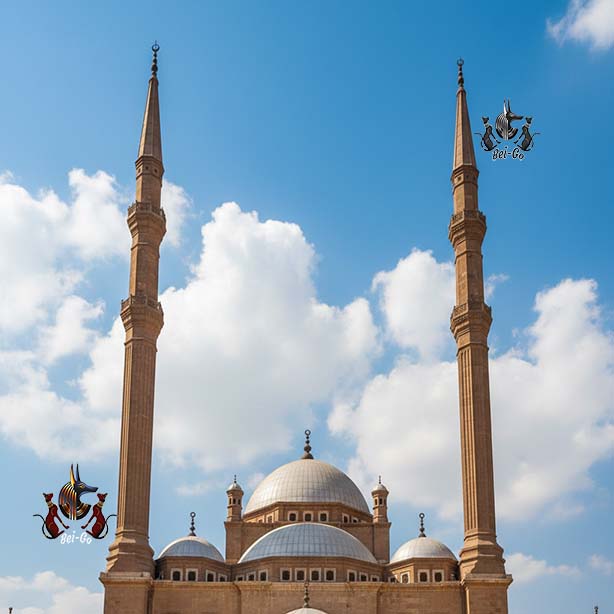
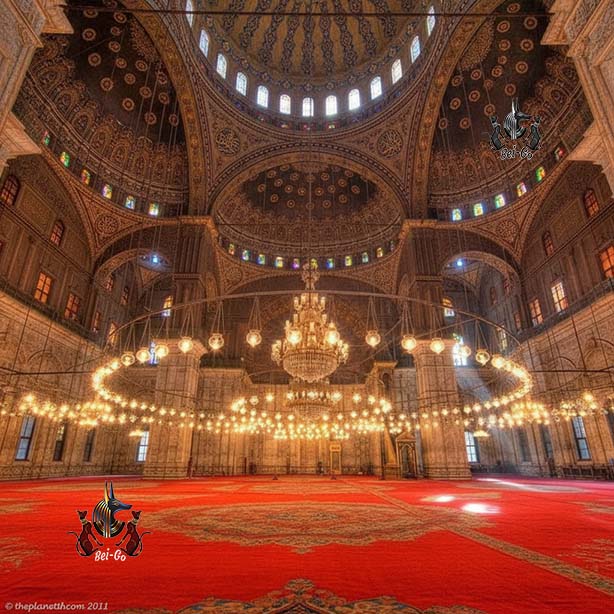
Interior Grandeur - A Palace of Prayer
Stepping inside the Muhammad Ali Mosque reveals an interior of breathtaking scale and opulence that successfully rivals the great imperial mosques of Istanbul that inspired its design. The vast prayer hall can accommodate thousands of worshippers beneath its soaring central dome, which is decorated with intricate geometric patterns, floral motifs, and calligraphic inscriptions painted in gold leaf and vibrant blues, reds, and greens. Massive chandeliers hang from the ceiling throughout the space, including an impressive crystal chandelier gifted by King Louis Philippe of France in 1845, which was originally intended for installation in the main dome but proved too heavy for the structure to support safely. Natural light floods the interior through numerous arched windows positioned around the dome's drum and along the walls at multiple levels, creating an ethereal atmosphere that is further enhanced by the alabaster's natural reflective and translucent qualities. The mihrab, which indicates the direction of Mecca for prayer, is elaborately decorated with gold leaf, intricate carved marble work, and precious stone inlays that demonstrate the highest levels of Islamic decorative arts. The minbar features delicate woodwork with mother-of-pearl and ivory inlays, while rich red carpets cover the marble floors in geometric patterns that guide worshippers' placement during congregational prayers. After experiencing the mosque's spiritual grandeur, visitors often enjoy evening tours along the Nile to discover Cairo's magical atmosphere as the city transforms after sunset.
Visitor Experience - Practical Information for Your Visit
Visiting the Citadel of Saladin and Muhammad Ali Mosque offers travelers an enriching cultural experience that combines architectural appreciation, historical learning, spiritual atmosphere, and spectacular city views all in one remarkable location. The complex is open to visitors daily except during the five Islamic prayer times, typically operating from 8:00 AM to 5:00 PM, though hours may vary during Ramadan and major Islamic holidays when access may be restricted or modified. Entry to the Citadel complex includes access to the Muhammad Ali Mosque, the Al-Nasir Muhammad Mosque, several museums, and the fortress grounds, costing approximately 200 Egyptian pounds for foreign visitors with discounted rates available for students presenting valid international identification cards. Visitors must dress modestly out of respect for the religious nature of the site, with women required to cover their heads, shoulders, and knees; complementary scarves are available at the entrance for those who need them. Shoes must be removed before entering the mosque's prayer hall, and plastic bags are provided to carry them during your interior visit. The courtyard features a beautiful Ottoman-style ablution fountain with an ornate copper-covered dome where worshippers perform ritual washing before prayer. For travelers seeking expert guidance and seamless experiences throughout Egypt, Bei-Go specializes in creating comprehensive itineraries that include this architectural masterpiece with knowledgeable local guides who bring history to life.

Planning Your Perfect Visit
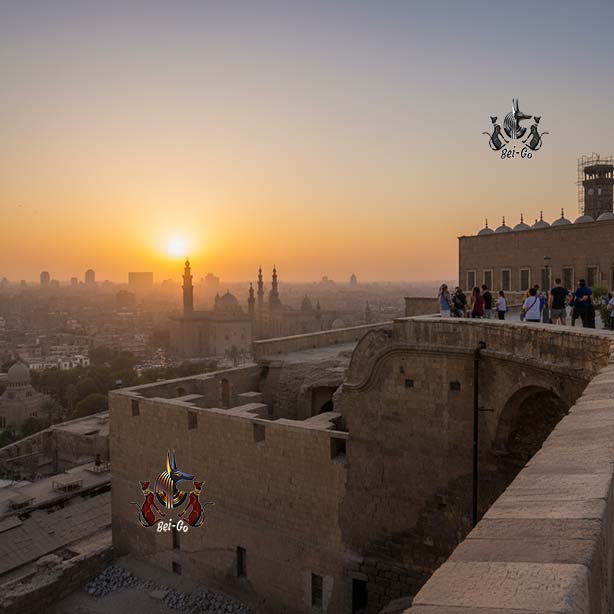
The Citadel of Saladin and Muhammad Ali Mosque deserve at least two to three hours for a thorough visit, allowing ample time to explore the mosque interior, stroll through the fortress grounds, visit additional historic buildings within the complex, and absorb the panoramic views while understanding the historical significance of this remarkable site. The best time to visit is during the cooler morning hours between 8:00 and 10:00 AM or late afternoon after 3:00 PM when the lighting enhances the alabaster's natural beauty, temperatures are more comfortable for exploring the elevated outdoor areas, and the site is typically less crowded than midday. Many visitors strategically combine their Citadel visit with other nearby Islamic Cairo attractions, creating a full day of historical exploration that includes medieval mosques, traditional bazaars, and ancient quarters that preserve Cairo's layered architectural heritage. The elevated position provides spectacular sunset views when Cairo's sprawling landscape transforms into a sea of twinkling lights stretching toward the distant pyramids on the horizon, creating unforgettable photographic opportunities. Consider planning your Egyptian journey with Bei-Go, a trusted travel agent offering expertly curated tours that ensure you experience the Mosque of Muhammad Ali and Citadel of Saladin alongside pyramids, museums, and bazaars with professional guides who transform ancient stones into living history. Whether you're a first-time visitor to Egypt or returning to explore deeper layers of Cairo's rich Islamic heritage, this magnificent complex remains an unmissable destination that perfectly encapsulates centuries of Egyptian power, faith, and architectural achievement.
Frequently Asked Questions
What is the best time to visit the Citadel of Saladin and Muhammad Ali Mosque?
The best time to visit is during the cooler morning hours between 8:00-10:00 AM or late afternoon after 3:00 PM. These times offer comfortable temperatures, better lighting for photography, fewer crowds, and the opportunity to experience sunset views from the elevated position. Avoid midday heat and prayer times when access may be restricted.
How much does it cost to enter the Citadel and Muhammad Ali Mosque?
Entry to the Citadel complex, which includes access to the Muhammad Ali Mosque, Al-Nasir Muhammad Mosque, museums, and fortress grounds, costs approximately 200 Egyptian pounds for foreign visitors. Students with valid international identification can receive discounted rates. The ticket provides access to multiple historical sites within the complex.
What is the dress code for visiting the Muhammad Ali Mosque?
Visitors must dress modestly out of respect for the religious site. Women are required to cover their heads, shoulders, and knees. Complimentary scarves are available at the entrance for those who need them. Men should wear long pants and avoid sleeveless shirts. All visitors must remove shoes before entering the prayer hall.
Why is the Muhammad Ali Mosque called the Alabaster Mosque?
The mosque earned the nickname "Alabaster Mosque" because of the extensive use of alabaster marble covering both its interior and exterior walls. The marble panels, measuring up to 11 meters in height, create a distinctive luminous quality that changes throughout the day as sunlight reflects off the stone's translucent surfaces, making it one of Cairo's most visually
How long does it take to visit the Citadel of Saladin and Muhammad Ali Mosque?
Plan to spend at least 2-3 hours for a comprehensive visit. This allows time to explore the mosque interior, walk through the Citadel fortress grounds, visit additional historic buildings within the complex like the Al-Nasir Muhammad Mosque, enjoy the panoramic city views, and absorb the historical significance of this remarkable UNESCO World Heritage site candidate.